
Thyroid Nodule
A lump within the thyroid gland — common and usually not cancer, but assessment is important
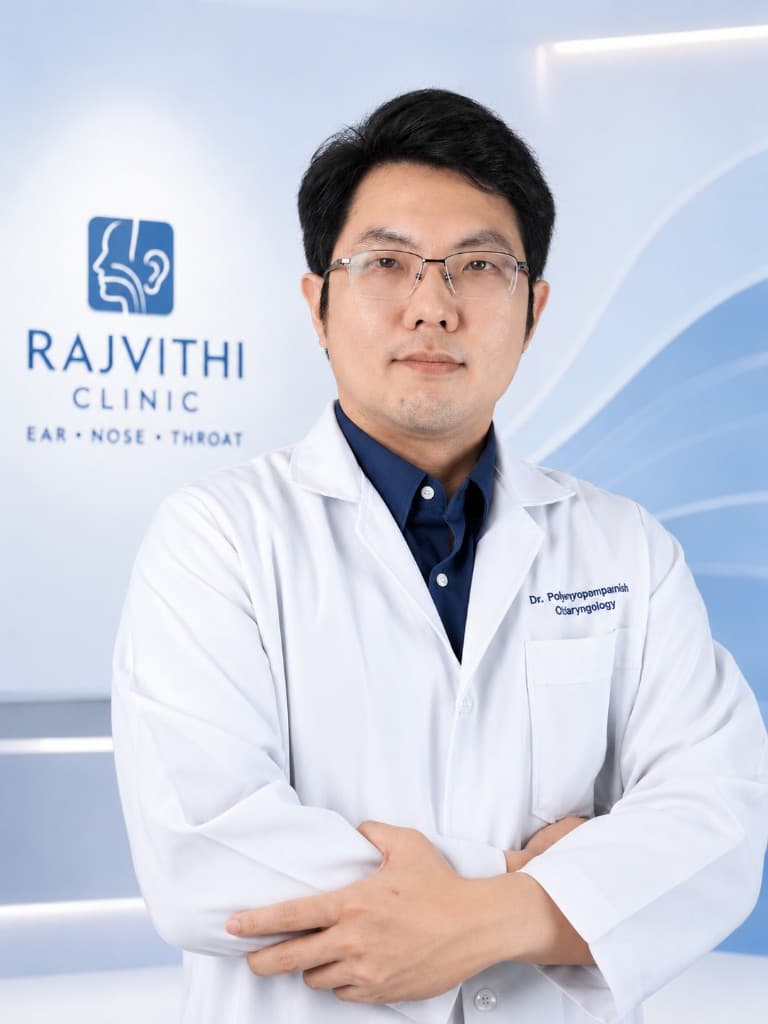
Medically reviewed by a board-certified ENT specialist
- Author:
- Dr. Poj Pinyopornpanish — Otolaryngologist · Thai Board of Otolaryngology
- Medical reviewer:
- Dr. Poj Pinyopornpanish — Otolaryngologist · Thai Board of Otolaryngology
- Reviewed on:
- Last updated:
- Estimated reading time: 5 min
Overview
What is a thyroid nodule
A thyroid nodule is a lump or fluid-filled area within the thyroid gland at the front of the neck. It may be found on examination, imaging, or incidentally. Most thyroid nodules are not cancer, but this cannot be confirmed from appearance alone. Your doctor assesses nodules with history, neck examination, ultrasound, and sometimes fine needle aspiration (FNA) when indicated. Not every nodule needs immediate surgery or treatment. The care plan depends on size, ultrasound features, symptoms, test results, and medical guidelines.
Symptoms
Symptoms you may notice
Many thyroid nodules cause no symptoms and are found on routine assessment or ultrasound.
A palpable lump at the front of the neck or visible neck fullness
No symptoms, but a nodule found on ultrasound or imaging
Tenderness over the nodule (in some people)
Hoarseness, swallowing difficulty, or breathing symptoms when the nodule is large
Symptoms of over- or underactive thyroid, such as palpitations or fatigue (in some people)
Slowly enlarging or stable neck lump
Possible causes
What thyroid nodules can represent
Thyroid nodules have several types. Further assessment helps guide management.
Solid nodule
A solid area within the thyroid. Most are not cancer, but ultrasound features need evaluation.
Cyst
A fluid-filled area in the thyroid, usually benign. Surveillance or FNA may be advised when indicated.
Mixed solid and cystic nodule
Contains both solid and fluid components; management depends on features.
Thyroid inflammation
Some inflammatory thyroid conditions cause nodularity or an uneven gland.
Autoimmune thyroid disease
Conditions such as Graves' disease may be associated with nodularity or gland enlargement.
Nodules needing cell confirmation
When features meet criteria, FNA may be recommended for cell diagnosis.
When to seek care
When to see an ENT specialist
Seek assessment if you notice a neck lump or concerning symptoms.
A new palpable lump at the front of the neck or clear enlargement
Hoarseness, swallowing difficulty, or breathing symptoms
Rapidly enlarging neck fullness
Symptoms suggesting over- or underactive thyroid
A nodule found on imaging without a follow-up plan
Relevant radiation history or family thyroid disease when asked by your doctor
Concern about a neck lump and need for appropriate testing advice
Diagnosis
How nodules are assessed
Your doctor takes a history, examines the neck, and may order thyroid blood tests when indicated. Thyroid and neck ultrasound is the main imaging test to assess nodule size, appearance, and number. It does not use ionising radiation. When features meet criteria, your doctor may recommend Fine Needle Aspiration (FNA) for cell diagnosis, often ultrasound-guided. FNA results help plan surveillance, treatment, or referral. For procedure details, see the thyroid and neck ultrasound procedure page and the Fine Needle Aspiration procedure page.
Treatment
Management options
Not every nodule needs immediate treatment. Your doctor selects an approach based on features, symptoms, and results.
Ultrasound surveillance
Some nodules are monitored at intervals for size and appearance. See the thyroid and neck ultrasound procedure page.
Fine needle aspiration (FNA)
When indicated, FNA samples cells to guide care. See the Fine Needle Aspiration procedure page.
Treating thyroid hormone imbalance
If the thyroid is over- or underactive, treatment may address the underlying condition.
Referral or specialist treatment
Some nodules require endocrine surgery referral or further treatment based on results.
Follow-up after pathology
After FNA, your doctor explains results and plans surveillance or next steps.
Self-care
What you can do at home
Self-care does not replace medical assessment but helps you notice changes and prepare for appointments.
Monitor whether the lump or neck appearance is changing
Note symptoms such as hoarseness, swallowing difficulty, or thyroid-related symptoms
Bring prior tests, ultrasound reports, or FNA results to your appointment
Avoid repeatedly pressing or massaging the lump
Seek urgent care for warning symptoms such as breathing difficulty or rapid enlargement
Prevention
Staying informed and healthy
Thyroid nodules cannot always be prevented, but follow-up as advised is important.
Attend scheduled ultrasound surveillance — do not skip follow-up scans
Tell your doctor about neck radiation history or family thyroid disease
Maintain general health and take prescribed thyroid medication if needed
Avoid self-diagnosis from online information — let your doctor interpret test results
FAQ
Common questions about thyroid nodules
Does a thyroid nodule mean cancer
Most are not cancer, but this cannot be confirmed in every case from examination or ultrasound alone. Your doctor will explain what your results mean.
Does every nodule need ultrasound
Not in every situation, but when a thyroid nodule is found or suspected, ultrasound is the main assessment tool. See the thyroid and neck ultrasound procedure page.
Does every nodule need FNA
No. FNA is considered based on size, ultrasound features, symptoms, and guidelines. See the Fine Needle Aspiration procedure page.
Do all nodules need surgery
No. Some are monitored only; others need FNA or other treatment based on results. Your doctor will explain the plan.
Are thyroid blood tests needed
Your doctor may order blood tests when indicated to assess thyroid function alongside nodule evaluation.
Where is RAJVITHI CLINIC
1st Floor, MD Boutique Hotel, 18 Rajvithi Road, Chiang Mai
References
Related guidelines and patient resources
The sources below are recognized international guidelines and patient-education resources for general learning. They are not individualized medical advice.
Thyroid nodule and fine-needle aspiration guidance
American Thyroid Association (ATA)
View source (American Thyroid Association (ATA))Patient education and clinical guidance in otolaryngology
American Academy of Otolaryngology–Head and Neck Surgery (AAO-HNS)
View source (American Academy of Otolaryngology–Head and Neck Surgery (AAO-HNS))Public ENT health information
ENThealth (AAO-HNS Foundation)
View source (ENThealth (AAO-HNS Foundation))
Educational information
Medical Disclaimer
This information is intended for educational purposes only and does not replace diagnosis or treatment by a qualified physician. If you have concerning symptoms, please consult an ENT specialist.
Related links
Learn more
Related clinic pages to help you explore conditions, services, and procedures.
Found a neck lump or need thyroid assessment
Book a consultation for evaluation and an appropriate testing plan.