
Snoring & Sleep Apnea Clinic
Assessment of snoring, mouth breathing, and obstructive sleep apnea (OSA) by an otolaryngologist

Medically reviewed by a board-certified ENT specialist
- Author:
- Dr. Poj Pinyopornpanish — Otolaryngologist · Thai Board of Otolaryngology
- Medical reviewer:
- Dr. Poj Pinyopornpanish — Otolaryngologist · Thai Board of Otolaryngology
- Reviewed on:
- Last updated:
- Estimated reading time: 6 min
Overview
How snoring differs from obstructive sleep apnea
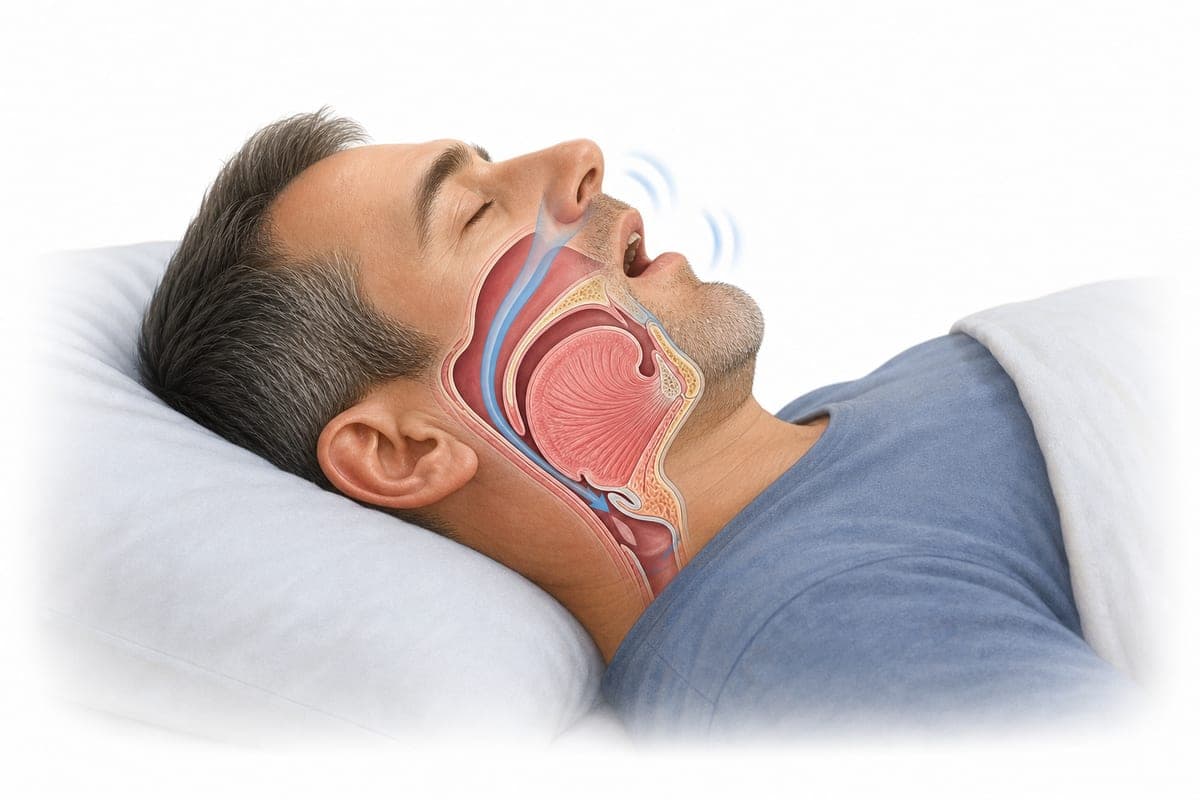
Snoring is the sound produced when air flows through a narrowed upper airway during sleep, causing tissues to vibrate. Many people snore without serious health consequences. However, loud or persistent snoring — especially with other symptoms — may warrant further assessment.
Obstructive sleep apnea (OSA) is a condition in which the upper airway becomes partially or completely blocked repeatedly during sleep. Breathing pauses or becomes shallow, oxygen levels may fall, and the brain briefly wakes the body to reopen the airway — often without the person being aware.
The key difference: snoring is a sound; OSA is a sleep disorder that can affect sleep quality, daytime function, and long-term health. Some people have both. An ENT assessment helps determine whether your symptoms are snoring alone or include OSA that may need treatment.
Symptoms
Common symptoms
Symptoms vary. Some people snore only; others have features of OSA as well.
Loud snoring, especially when sleeping on the back
Observed pauses in breathing during sleep
Daytime sleepiness despite adequate time in bed
Morning headaches
Reduced concentration, mood changes, or memory problems
Unrefreshing sleep, frequent waking, or waking with a dry mouth
Mouth breathing, nasal congestion, or dry mouth on waking
Restless sleep or waking feeling unrefreshed
Possible causes
Factors that narrow the airway
Snoring and OSA often result from several factors that reduce upper airway size during sleep.
Airway narrowing
Relaxation of throat tissues, soft palate, or uvula during sleep can narrow the passage and cause snoring.
Obesity
Fat deposits around the neck and upper airway may increase the risk and severity of OSA.
Enlarged tonsils or adenoids
Especially in children and some adults, enlarged tissue can obstruct the posterior airway.
Deviated septum
Structural nasal deviation can make nasal breathing difficult and contribute to obstruction.
Allergic rhinitis
Chronic nasal congestion or sinus inflammation may promote mouth breathing and airway narrowing.
Craniofacial anatomy
A small jaw, short neck, or other facial structure features may narrow the airway from the outset.
When to seek assessment
When to see an ENT specialist
Consider assessment if you have any of the following:
Regular loud snoring or witnessed breathing pauses during sleep
Daytime sleepiness that affects work or driving safety
Unrefreshing sleep, morning headaches, or reduced concentration
High blood pressure, heart disease, or poorly controlled diabetes with suspected sleep problems
Persistent mouth breathing, nasal blockage, or tonsil/adenoid concerns
Previous OSA diagnosis with ongoing symptoms or difficulty using CPAP
Diagnosis
How assessment is done
Assessment begins with a sleep and daytime symptom history, risk factors, and information from a bed partner when available.
The doctor examines the ear, nose, and throat to assess the upper airway, tonsils, adenoids, nasal structure, and factors that may contribute to obstruction.
When indicated, flexible nasal endoscopy may be used to examine the nose, sinus area, and posterior throat — helping identify treatable ENT causes.
A sleep study may be recommended when OSA is suspected or symptoms are significant. It confirms whether breathing pauses occur during sleep and helps gauge severity. Sleep studies are ordered when clinically appropriate — not for every person who snores.
Treatment
Management options
Treatment depends on severity, cause, and individual factors. Your doctor will discuss options with you.
Lifestyle modification
Avoiding alcohol before bed, side sleeping, slight head elevation, or avoiding sedating medications when appropriate may help some patients.
Weight reduction
In overweight patients, weight loss may reduce snoring and OSA severity in some cases.
Medical treatment
Medication may help related conditions such as allergic rhinitis or nasal congestion, but does not replace OSA-specific treatment when indicated.
CPAP
Continuous positive airway pressure is a mainstay treatment for OSA when diagnosed, delivering pressurised air to keep the airway open during sleep.
Radiofrequency treatment
Radiofrequency may be considered for selected snoring or mild-to-moderate OSA cases when clinically indicated and suitability is confirmed.
Surgery
Surgery may be considered when structural factors such as tonsils, adenoids, or septal deviation are present and other options are unsuitable or ineffective. Surgery is indicated selectively — not as a first option for everyone.
Why RAJVITHI CLINIC
Why choose RAJVITHI CLINIC
Upper-airway snoring and OSA assessment is well suited to care by an otolaryngologist.
Assessment by an ENT (otolaryngology) specialist with systematic upper-airway evaluation
Flexible nasal endoscopy when indicated to identify treatable nasal and throat contributors
Individualized treatment planning based on symptoms, findings, and what is appropriate for you
Evidence-based care with clear explanation of symptoms, findings, and options in plain language
Coordination with sleep medicine colleagues when sleep study or CPAP is required
FAQ
Questions patients often ask
Does everyone who snores have sleep apnea?
No. Snoring is common and not always harmful. OSA involves repeated breathing pauses or shallow breathing during sleep. If you have daytime symptoms or witnessed apnoeas, assessment is advisable.
Do I need a sleep study if I snore?
Not always. Your doctor will consider symptoms, examination findings, and severity. A sleep study may be recommended when OSA is suspected or symptoms affect daily life.
Is CPAP required for everyone with OSA?
CPAP is a primary treatment for many OSA cases, but not the only option. Weight management, ENT treatments, radiofrequency, or surgery may be considered depending on cause and suitability.
Is nasal endoscopy painful?
It is usually brief. The doctor explains the steps and may use local anaesthetic spray. It helps assess the nose and throat areas related to airway obstruction.
Should children who snore see a doctor?
Children with persistent snoring or mouth breathing, especially with enlarged tonsils or adenoids, should be assessed. Causes and management in children may differ from adults.
Can weight loss reduce snoring?
In overweight patients, weight loss may reduce snoring and OSA severity in some cases, but it does not replace medical assessment when symptoms are significant.
Is radiofrequency suitable for everyone?
No. Suitability depends on symptom type and severity, airway anatomy, and previous treatments. Your doctor will assess this individually.
Do I need an appointment?
Appointments are recommended, especially if endoscopy or a longer assessment is planned. Bring sleep information from a bed partner, medication lists, and prior reports if available.
Where is RAJVITHI CLINIC?
The clinic is at 1st Floor, MD Boutique Hotel, 18 Rajvithi Road, Chiang Mai. Contact via phone, LINE, or WhatsApp from the contact section.
Is English consultation available?
Yes. The clinic sees international patients and English consultation is available. Please bring prior sleep history or sleep-study reports if you have them.
References
Related guidelines and patient resources
The sources below are recognized international guidelines and patient-education resources for general learning. They are not individualized medical advice.
Obstructive sleep apnea and snoring resources
American Academy of Sleep Medicine (AASM)
View source (American Academy of Sleep Medicine (AASM))Snoring patient information
AAO-HNS / ENThealth
View source (AAO-HNS / ENThealth)Patient education and clinical guidance in otolaryngology
American Academy of Otolaryngology–Head and Neck Surgery (AAO-HNS)
View source (American Academy of Otolaryngology–Head and Neck Surgery (AAO-HNS))Public ENT health information
ENThealth (AAO-HNS Foundation)
View source (ENThealth (AAO-HNS Foundation))
Educational information
Medical Disclaimer
This information is intended for educational purposes only and does not replace diagnosis or treatment by a qualified physician. If you have concerning symptoms, please consult an ENT specialist.
Related links
Learn more
Related clinic pages to help you explore conditions, services, and procedures.
Interested in snoring or sleep assessment?
Contact the clinic to book an appointment or ask preliminary questions. The doctor will assess your symptoms and recommend appropriate next steps.