
Ear Keloid Excision
Safe, focused surgery for bothersome ear keloids with meticulous closure and a plan to reduce recurrence risk.
Medically reviewed by a board-certified ENT specialist
- Author:
- Dr. Poj Pinyopornpanish — Otolaryngologist · Thai Board of Otolaryngology
- Medical reviewer:
- Dr. Poj Pinyopornpanish — Otolaryngologist · Thai Board of Otolaryngology
- Reviewed on:
- Last updated:
- Estimated reading time: 4 min
Overview
What is ear keloid excision?
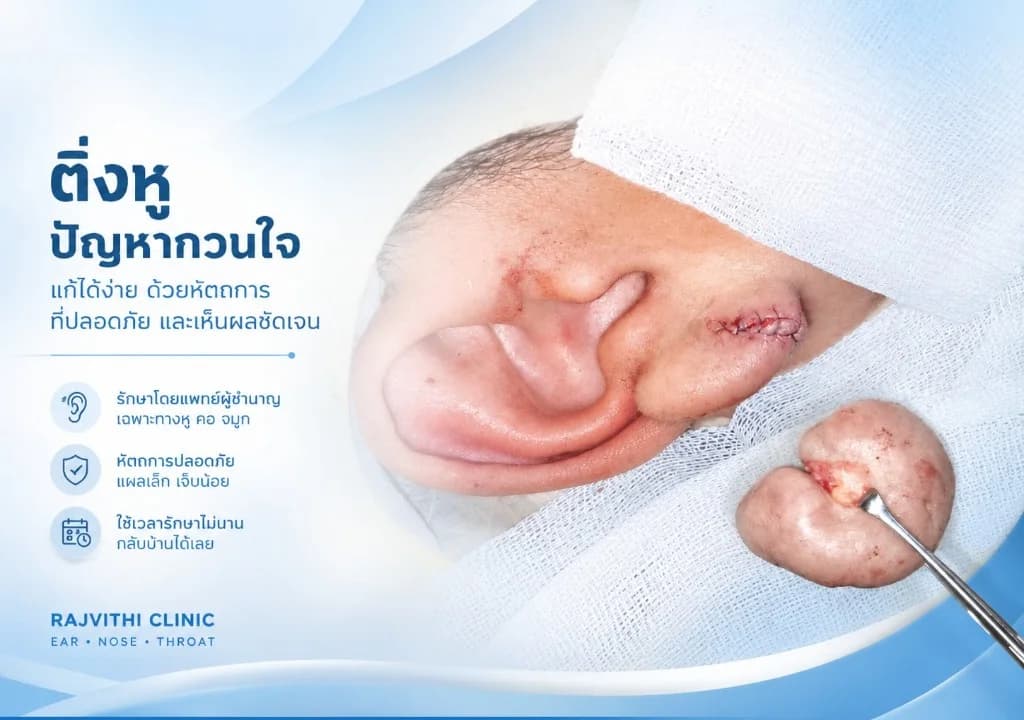
An ear keloid is thickened scar tissue that grows beyond the original wound, often after ear piercing, injury, or repeated inflammation. It may cause itching, tenderness, pulling on the skin, or cosmetic concern.
Ear keloid excision removes the keloid tissue with meticulous surgical technique and careful wound closure. Your ENT specialist assesses size, location, and the aftercare plan with you.
Surgery can reduce the raised lump, relieve irritation, and prepare for additional treatment aimed at lowering recurrence risk. Not every keloid needs immediate surgery — your doctor explains options based on symptoms and examination findings.
Symptoms
Symptoms you may notice
Ear keloids may present as:
A raised lump or thick scar on the ear or earlobe
Itching, burning, or tenderness when touched
Slow growth after a previous wound has healed
Skin tightness or pulling at the ear
Cosmetic concern or difficulty wearing earrings
Recurrence after previous treatment
Possible causes
Why ear keloids develop
Common contributing factors include:
Ear piercing or earrings
Small wounds at the earlobe may keloid in people prone to excessive scarring.
Repeated inflammation or infection
Ongoing irritation can stimulate tissue to grow beyond the wound edge.
Ear trauma
Injury or prior surgery may leave a keloid scar behind.
Tendency to keloid scarring
Some patients are at higher risk regardless of wound site.
Incomplete prior treatment
Partial removal or injections alone may allow the keloid to return.
Chronic irritation
Repeated rubbing or scratching may enlarge the lesion.
When to seek assessment
When to see an ENT specialist
Consider assessment if you have any of the following:
A growing or increasingly itchy ear keloid
Keloid recurrence after prior treatment
You want to understand surgical versus non-surgical options
Pain, redness, or discharge from the lesion
The keloid interferes with glasses or earrings
You need a plan to reduce recurrence risk
Diagnosis
How your doctor assesses ear keloids
Your doctor reviews piercing or injury history and prior treatments, then examines the keloid’s size, location, and surrounding skin.
Diagnosis is usually clinical. Pathology may be requested in selected cases. Your doctor explains whether excision, injection therapy, or combined care is appropriate.
Before surgery, you receive clear information on anaesthesia, recovery time, wound care, and follow-up.
Treatment
Treatment options for ear keloids
Management depends on keloid size, prior treatment, and recurrence risk.
Surgical excision
Precise removal and closure when the keloid is large or significantly symptomatic.
Injection therapy
May be used alone in selected small lesions or combined with surgery.
Recurrence prevention
Adjunct care after excision to lower the chance of keloid return.
Aftercare
Wound care, medication, and scheduled follow-up as advised.
Long-term monitoring
Review healing and watch for early recurrence.
Why RAJVITHI CLINIC
Why choose RAJVITHI CLINIC
Ear lesion care is part of specialist otolaryngology practice.
ENT specialists familiar with ear anatomy and ear scarring
Meticulous surgical technique for functional and cosmetic outcomes
Clear explanation of procedure, risks, and aftercare
Evidence-based plans to reduce recurrence risk
Structured postoperative follow-up
FAQ
Questions patients often ask
Is ear keloid excision painful?
Local anaesthetic or sedation is used as appropriate. Mild soreness after surgery is common and usually manageable with prescribed pain relief.
Will I need to stay in hospital?
Many cases are day procedures. This depends on keloid size and your overall health.
Can the keloid come back?
Recurrence is possible. Your doctor discusses adjunct treatment and follow-up to reduce risk.
How long is recovery?
Recovery is usually short. Your doctor advises wound care and activity restrictions for the early healing period.
Where is RAJVITHI CLINIC?
1st Floor, MD Boutique Hotel, 18 Rajvithi Road, Chiang Mai
References
Related guidelines and patient resources
The sources below are recognized international guidelines and patient-education resources for general learning. They are not individualized medical advice.
Patient information on ear and hearing conditions
AAO-HNS / ENThealth
View source (AAO-HNS / ENThealth)Patient education and clinical guidance in otolaryngology
American Academy of Otolaryngology–Head and Neck Surgery (AAO-HNS)
View source (American Academy of Otolaryngology–Head and Neck Surgery (AAO-HNS))Public ENT health information
ENThealth (AAO-HNS Foundation)
View source (ENThealth (AAO-HNS Foundation))
Educational information
Medical Disclaimer
This information is intended for educational purposes only and does not replace diagnosis or treatment by a qualified physician. If you have concerning symptoms, please consult an ENT specialist.
Related links
Learn more
Related clinic pages to help you explore conditions, services, and procedures.
Interested in ear keloid excision?
Contact the clinic to book an appointment or ask preliminary questions. The doctor will assess your keloid and recommend appropriate care.